
Introduction
Electronics circuits typically consist of various components, each serving a specific purpose in the circuit’s operation. Here are five fundamental building blocks commonly found in electronic circuits:
Follow us on Linkedin for everything around Semiconductors & AI
Resistors:
Resistors are passive components that resist the flow of electrical current. They are used to control the amount of current in a circuit, divide voltage, set bias levels, terminate transmission lines, and more.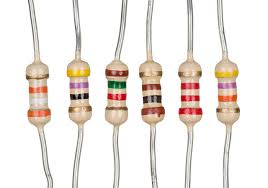
Analogous to a water pipe with a narrow section: Imagine water flowing through a pipe. If you narrow a section of the pipe, the water flow decreases. Similarly, in a circuit, resistors restrict the flow of electrical current. The narrower the pipe, the more resistance to the flow of water; likewise, the higher the resistance value of a resistor, the more it resists the flow of electrical current.
Read More: $6.4 Billion Chips Act Grant for Samsung: $40 Billion Investment to Create 21,500 Jobs – techovedas
Capacitors:
Capacitors store and release electrical energy in the form of an electric field. They are used for filtering, smoothing voltage, coupling signals between different parts of a circuit, and as timing elements in oscillators and timing circuits.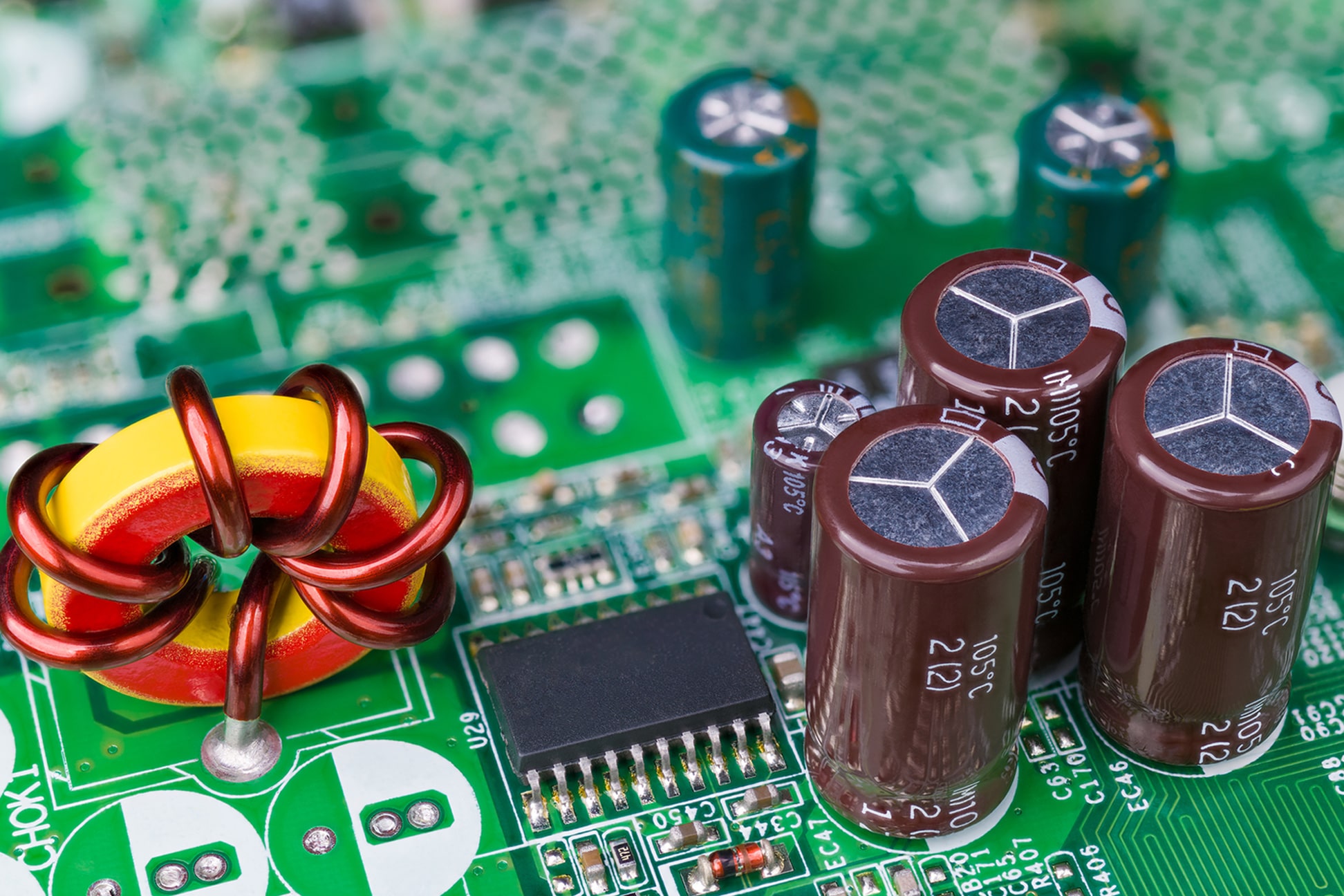
Think of a sponge soaking up water and then releasing it when squeezed:
A capacitor stores electrical energy in an electric field, similar to how a sponge can absorb and store water. When you apply a voltage across a capacitor, it charges up like squeezing the sponge. When you release the voltage, it discharges, releasing the stored energy.
Read More: $44 Billion : Why Is Samsung Increasing Semiconductor Investment in US?
Inductors:
Inductors store energy in a magnetic field when current flows through them. They are used in circuits to block AC signals while allowing DC signals to pass, filter out noise, store energy in power supplies, and create oscillators.
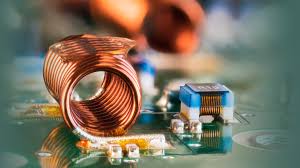
Comparable to a spinning bicycle wheel: When you spin a bicycle wheel, it resists changes in its rotational speed. Similarly, an inductor resists changes in current flow. When current flows through an inductor, it builds up a magnetic field, and when you try to change the current, the inductor opposes that change by inducing a voltage in the opposite direction.
Read More: Samsung Steals $752 Million AI Chip Deal with Mach-1 from Nvidia
Diodes:
Diodes are semiconductor devices that allow current to flow in one direction only. They are used for rectification (converting AC to DC), voltage regulation, signal demodulation, and protection against reverse polarity and voltage spikes.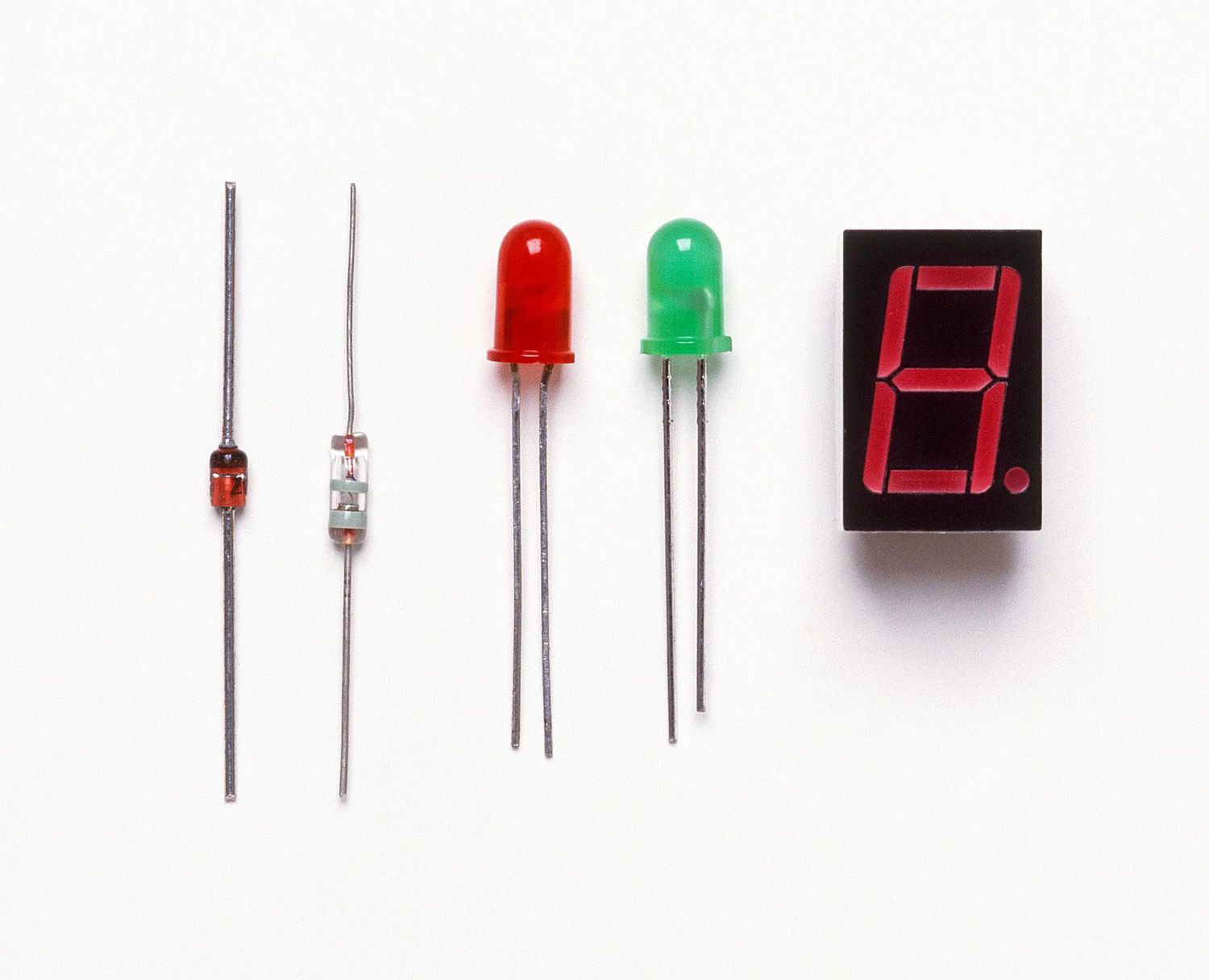
Like a one-way valve in a plumbing system: A diode allows current to flow in one direction only, similar to how a one-way valve lets water flow in only one direction in a plumbing system. If you try to force water through the valve in the wrong direction, it won’t go through. Similarly, if you apply a voltage across a diode in the wrong direction (reverse bias), it blocks current flow.
Read More: Elon Musk’s Grok-1.5 Beats OpenAI’s GPT-4V – techovedas
Transistors:
Transistors are semiconductor devices that can amplify or switch electronic signals and electrical power. 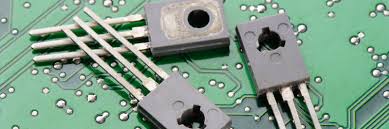
They are the building blocks of modern electronics and are used in a wide range of applications, including amplifiers, oscillators, digital logic circuits, and power control.
Think of a faucet controlled by a lever: A transistor acts like a switch or an amplifier in a circuit. In a simple analogy, imagine a faucet controlled by a lever.
When you move the lever, it can either allow water to flow freely (on state) or block the water flow completely (off state).
Transistors work similarly, controlling the flow of electrical current between two terminals based on the voltage applied to a third terminal.
Read More: 15 Stocks Poised to Rocket AI Industry to $420 Billion by 2027 – techovedas
Conclusion
These building blocks, along with other components like integrated circuits, transformers, switches, and connectors, are combined and interconnected to create complex electronics circuits typically consist of various components, each serving a specific purpose in the circuit’s operation. for various purposes.